
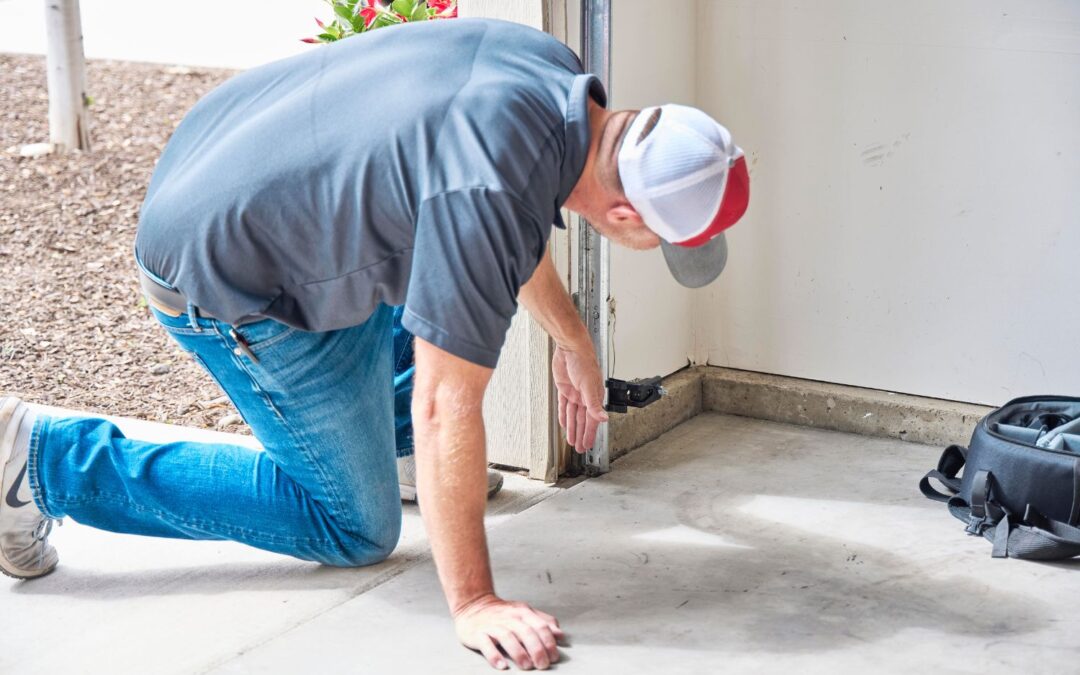
What a Garage Door Photo Eye Does
A garage door photo eye is a pair of small sensors mounted near the floor on either side of the door. They send an invisible beam across the opening. If something breaks that beam while the door is closing, the opener reverses. That’s why one dirty or crooked sensor can make a perfectly good door refuse to close.
This isn’t an optional extra. Federal rules have required external entrapment protection on automatic openers, like a photo eye, since January 1, 1993, according to the Door & Access Systems Manufacturers Association. The U.S. Consumer Product Safety Commission says the sensors belong 4 to 6 inches above the floor, low enough to catch a child crawling under a closing door.
The same CPSC guide reports that about 73 children ages 2 to 14 have been trapped and killed under automatic garage doors since March 1982, roughly three a year. That’s why we don’t treat a sensor problem as a nuisance. It’s a safety system doing exactly what it was built to do.
Start With the Lights
Before you touch anything, look at the small light on each sensor. On most setups, a solid light on both sensors means the beam is connected and clear. Colors and patterns vary by brand, so check your opener’s manual for yours. Our own FAQ gives the same advice: if the door won’t close and the opener light is blinking, check the photo eyes and look for a solid light on both sides.
Here’s how to read what you see, based on one contractor’s troubleshooting guide:
- Both lights solid: the beam is aligned and clear, so the problem is probably somewhere else.
- One light flickering or off, usually on the receiving sensor: the beam is partly blocked or the sensors have drifted out of line. Clean, then realign.
- One sensor completely dark: it has lost power. Check the thin wire running from it to the opener.
- Both dark: no power is reaching either one. That points to wiring or the opener, and it’s a good time to call us.
The 10-Minute Fix
The common advice when a sensor acts up is to buy new ones. In practice, the usual suspects are a bumped bracket, a dirty lens, or glare, and all three are free to fix. The same contractor guide calls a bumped bracket the most common cause. Work through these in order.
1. Clear the path and wipe the lenses
Move bikes, bins, and anything else within about three feet of each sensor. Then wipe both lenses with a soft, slightly damp microfiber cloth. Don’t spray cleaner at the sensor, and skip solvents. Cobwebs inside the housing can cross the beam too, so wipe around the bracket while you’re there.
2. Test the alignment with your hand
Wave your hand in front of the photo eyes. Both lights should be on before you start. As your hand breaks the beam, one light should go off while the other stays on. That tells you the sensors are lined up across from each other at the same height, which is exactly where they need to stay to work.
Another common culprit is the track itself. A track that vibrates every time the door runs can slowly shake a photo eye out of position. If that’s what’s happening, give us a call. We’ll come out and brace the track to the wall so the sensors stay put.
3. Realign the sensor
Open the door all the way first. Loosen the wing nut on the sensor that’s out of line, but don’t remove it. Nudge the sensor toward the other one until its light turns solid, then stop and tighten the nut. If the light flickers, loosen it, re-aim, and try again.
4. Follow the wire
Trace the thin wire from each sensor to the opener. You’re looking for chew marks, a staple pinched through the insulation, or a loose connection at the opener. Any of those can look exactly like a misaligned sensor.
Then test your work. Close the door with the wall button, and wave a broom handle through the beam as it comes down. The door should reverse right away. Try it with the remote too. If you need help with a remote or keypad that’s acting up, our post on three common garage door problems covers those fixes.
When Sun, Snow, or Weather Is the Problem
If the door only acts up at certain times of day, suspect the sun. Late-day sun shining straight into the receiving sensor can blind it, and the fix is usually to tilt the sensor slightly or add a small shade.
Say the door only fights you on sunny afternoons in January. That’s a glare problem, not a dead sensor, and a shade is a much cheaper fix than a new pair. In winter, also check for slush, a snow ridge, or standing water at the bottom of the track. Anything that bends or blocks the beam will stop the door.
Never Work Around a Sensor
We’re firm on one point. Don’t tape over a sensor, unplug it, or hold the wall button down to force the door closed. Some openers will let you close the door that way when a sensor is faulty, and it can feel like a fix. It isn’t. You’ve switched off the one thing that stops the door from closing on a person.
Malfunctioning safety sensors are part of the service and repair work we do, and we’d much rather you call than bypass one to get out the door. Our annual service includes a 25-point inspection, which is a good time to ask us to look at the sensors, too. And honestly, this is the one repair we wish every homeowner knew how to do.
When to Stop and Call a Pro
Photo eye fixes are friendly, but they have limits. Call us if any of these sound familiar:
- You’ve cleaned, realigned, and checked the wire, and the door still reverses. The sensor itself or the opener’s control board may be the cause.
- The wire runs through a finished wall or ceiling and you can’t see where it’s damaged.
- Both sensor lights are dark, and you’ve confirmed the opener has power.
- Your opener is older than 1993. Openers made before then weren’t required to have external entrapment protection, so yours may not have photo eyes at all. Our guide to the signs it’s time to replace your garage door opener explains what to look for.
If you’d rather not guess, our technicians can diagnose sensor and opener problems on any make, model, or size of door. Read more on our service and repair page, call us at 541.593.5700, or request a free estimate.
Frequently Asked Questions About Garage Door Photo Eyes
Why does my garage door go back up when I try to close it?
The opener thinks something is in the way. A blocked, dirty, or misaligned photo eye is the usual reason. A door that’s out of balance can cause the same behavior. Check the sensor lights first, then call a technician if both are solid and the door still reverses.
What do the lights on garage door sensors mean?
On most openers, a solid light on each sensor means the beam is connected and clear. A flickering or dark light points to a blocked, misaligned, or unpowered sensor. Colors and patterns vary by brand, so check your manual or call us if you can’t match what you see.
How high should garage door photo eyes be mounted?
The Consumer Product Safety Commission says 4 to 6 inches above the floor, and the Door & Access Systems Manufacturers Association says no higher than six inches. That low placement catches a child crawling under a closing door. If yours are mounted higher, have a technician move them.
Can I bypass my garage door sensors?
No. Taping over a sensor, unplugging it, or holding the wall button to force the door down removes the safety feature that reverses the door. If a sensor keeps failing, repair or replace it. Our technicians can diagnose and fix malfunctioning safety sensors.
