
The indoor/outdoor dining experience isn’t a trend anymore—it’s an expectation. Guests want to feel connected to the outside world, especially in a place like Central Oregon, where the landscape is genuinely part of why people are here. And one of the most effective ways restaurants are creating that connection is with a commercial garage door.
Done well, a garage door transforms how a space feels and functions. It removes a wall from your floor plan, floods your dining room with natural light, and creates a seamless flow between inside and outside that guests notice immediately—even if they can’t quite put their finger on why the space feels so good.
This post breaks down why so many restaurants are making this move, what to look for when choosing a door, and how Central Oregon Garage Door helped a downtown Bend restaurant pull it off seamlessly.
Key Takeaways
- Commercial garage doors are one of the most versatile design tools available to restaurant owners—they open up space, improve atmosphere, and impress guests in ways that are hard to achieve otherwise.
- Full-view glass doors are the most popular choice for restaurants, but the right configuration depends on your space, your layout, and how you want guests to experience your restaurant.
- Space efficiency and hardware placement matter more in a restaurant than almost any other commercial setting—a door that works beautifully in a warehouse might be completely wrong for a tight dining room.
- Central Oregon’s climate is well-suited for indoor/outdoor dining during warmer months, but the right door can extend that experience further into the shoulder seasons with proper insulation and weatherstripping.
- Custom solutions exist for spaces that don’t fit standard configurations, and they’re worth exploring before assuming a standard door will work.
What to Look for When Choosing a Restaurant Garage Door
Not every commercial garage door is right for a restaurant. Industrial doors are built for durability and function. Restaurant doors need to do all of that and look the part. Here’s what to prioritize.
Full-View Glass Panels
For most restaurant applications, full-view glass doors are the go-to choice. Large glass panels—typically set in aluminum frames—let in natural light, give guests a visual connection to the outdoors, and create the open, airy feel that defines the indoor/outdoor dining experience.
Glass comes in a range of configurations: clear, frosted, tinted, and low-E options depending on your glare, privacy, and energy efficiency needs. It’s worth thinking through these choices early, because they affect both the look and the performance of the door year-round.
Space Efficiency and Hardware Placement
This is where restaurant garage door projects get interesting—and where a lot of standard door configurations fall short.
In a warehouse or industrial facility, there’s usually plenty of overhead clearance and room to spare. In a restaurant, you might be working with low ceilings, exposed timber beams, plumbing or HVAC overhead, or a layout where every inch of floor and wall space is accounted for. A door that works perfectly in one setting can be completely impractical in another.
The questions to ask:
- How much overhead clearance is there when the door is open?
- Where does the hardware land?
- Does the door swing or slide into any usable space?
- Are there custom track configurations that can solve a specific overhead challenge?
Getting answers to these questions before you commit to a door can save a significant amount of frustration and money later.
Insulation for Year-Round Use
Central Oregon gets cold. Fall arrives early, winters are real, and even spring evenings can have a bite to them. If you’re investing in a garage door to extend your dining experience into the shoulder seasons, insulation matters.
A well-insulated door with quality perimeter weatherstripping keeps heat in when the door is closed, makes the transition between open and closed feel more comfortable, and helps protect your interior temperature when the door is open on a cooler evening.
It’s also worth noting: if your restaurant uses the door as a divider between a heated interior and an outdoor patio, the insulation quality of the door affects your heating costs all winter long—even when guests aren’t using the patio. That adds up over time.
Discreet, Intentional Hardware
Restaurant design is all about the details. Big, bulky hardware like visible tracks, industrial-looking brackets, and exposed mounting systems can undercut an otherwise beautiful space. For customer-facing restaurant doors, it’s worth asking about powder-coated hardware, low-profile tracks, and mounting options that keep the mechanical elements as unobtrusive as possible.
The goal is a door that guests barely notice as a door. They just notice the feeling of being in a great space.
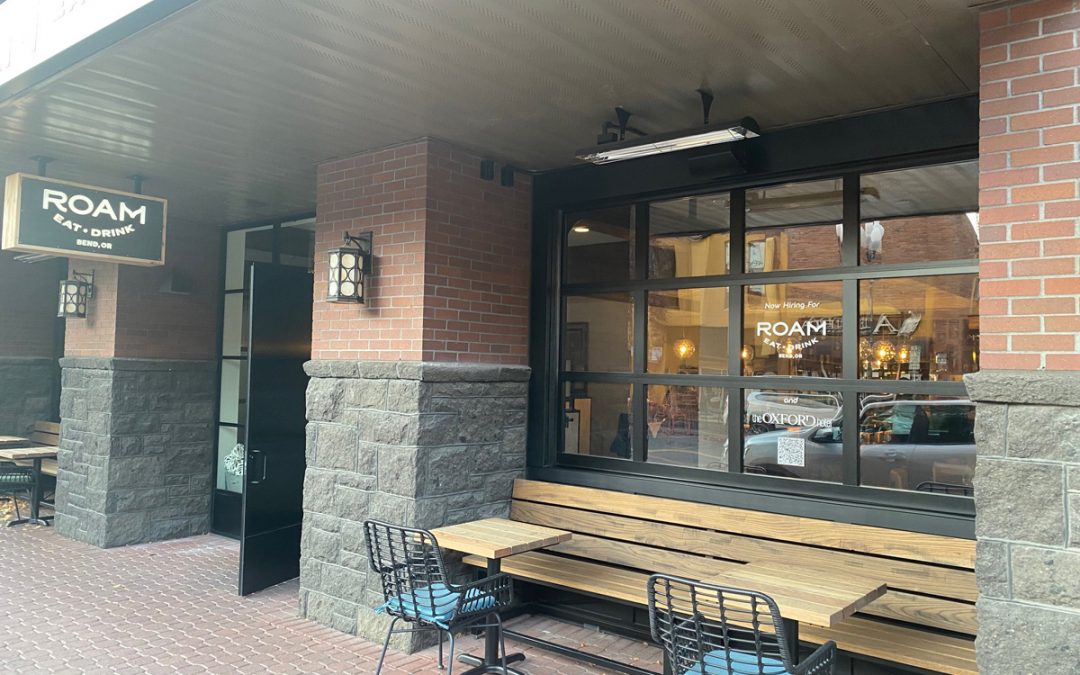
How Roam Restaurant in Downtown Bend Got It Right
Roam is a downtown Bend restaurant built to make the most of every square inch. The space is precisely designed—and that precision meant a standard garage door configuration wasn’t going to work.
The challenge: the doors couldn’t encroach into the dining room when open. In a tight, thoughtfully planned space, even a few inches of overhead door intrusion into the interior would have disrupted the layout and the experience the design team was going for.
Our solution was a fully custom configuration—doors engineered to open without eating into the interior space, paired with discreet, low-profile hardware that disappears into the overall design. We also incorporated a countertop into the door system, creating a seamless indoor/outdoor dining surface that activates the full potential of the opening when the doors are rolled up.
The result is a space where the door and the dining experience work together rather than competing. When the doors are open, guests at the counter are simultaneously inside and outside—part of the street energy of downtown Bend and part of the warmth of the restaurant. It’s a small detail that makes the whole experience feel intentional.
→ View the Roam Restaurant project
A Note on Maintenance for Restaurant Doors
Commercial garage doors in restaurant settings face a specific kind of wear. They open and close frequently, they’re exposed to cooking grease and moisture in the air, and they’re often operated by multiple staff members with varying degrees of familiarity with the system.
Annual professional service is the minimum for a restaurant door, and for higher-cycle applications, twice-yearly service is worth considering. Keeping the tracks clean, the hardware lubricated, and the weatherstripping in good condition ensures the door keeps performing the way it should, season after season. Here’s a closer look at what professional garage door service includes and how often you should schedule it.
The Right Door Makes the Whole Space Work Better
A great commercial garage door for a restaurant isn’t just a design choice. It’s an operational one. It expands your usable space, extends your season, impresses your guests, and—when it’s designed and installed well—becomes part of what makes your restaurant feel like itself.
Whether you’re opening a new space or rethinking an existing one, Central Oregon Garage Door can help you find the right door for your layout, your design, and your guests. We’ve done this kind of work across Central Oregon, and we understand what restaurant environments demand.
Contact us for a free estimate and let’s talk through what’s possible for your space.
Frequently Asked Questions: Commercial Garage Doors for Restaurants
What type of garage door is best for a restaurant?
Full-view glass doors in aluminum frames are the most popular choice for restaurants. They let in natural light, create an open and inviting atmosphere, and support the indoor/outdoor dining experience guests love. The right configuration—glass type, frame finish, hardware placement—depends on your specific space and design goals.
Can a commercial garage door work in a small restaurant space?
Absolutely, but it takes careful planning. The key questions are overhead clearance, where hardware lands, and whether the door intrudes into usable floor or ceiling space when open. Custom track configurations and low-profile hardware can solve a lot of challenges that would rule out a standard door. It’s worth having a professional assess your space before committing to a solution.
How do restaurant garage doors hold up in Central Oregon winters?
Well-insulated doors with quality weatherstripping handle Central Oregon winters without issue when the door is closed. When open, you’re naturally exchanging air with the outside—so most restaurants use these doors seasonally or on milder days. A good door gives you the flexibility to make that call based on the weather, rather than being locked into one configuration year-round.
Do restaurant garage doors require more maintenance than other commercial doors?
They can, depending on cycle frequency and the kitchen environment. Grease, humidity, and frequent use can affect hardware and weatherstripping faster than in a typical commercial setting. Annual professional service is essential, and higher-cycle restaurant doors may benefit from twice-yearly check-ins.
How long does it take to install a commercial garage door in a restaurant?
Most single-door restaurant installations can be completed in one day. More complex projects—custom configurations, multiple doors, unusual overhead situations—may take longer. We work with your timeline to minimize disruption to your operations, and we’ll give you a clear picture of the schedule before we start.
