
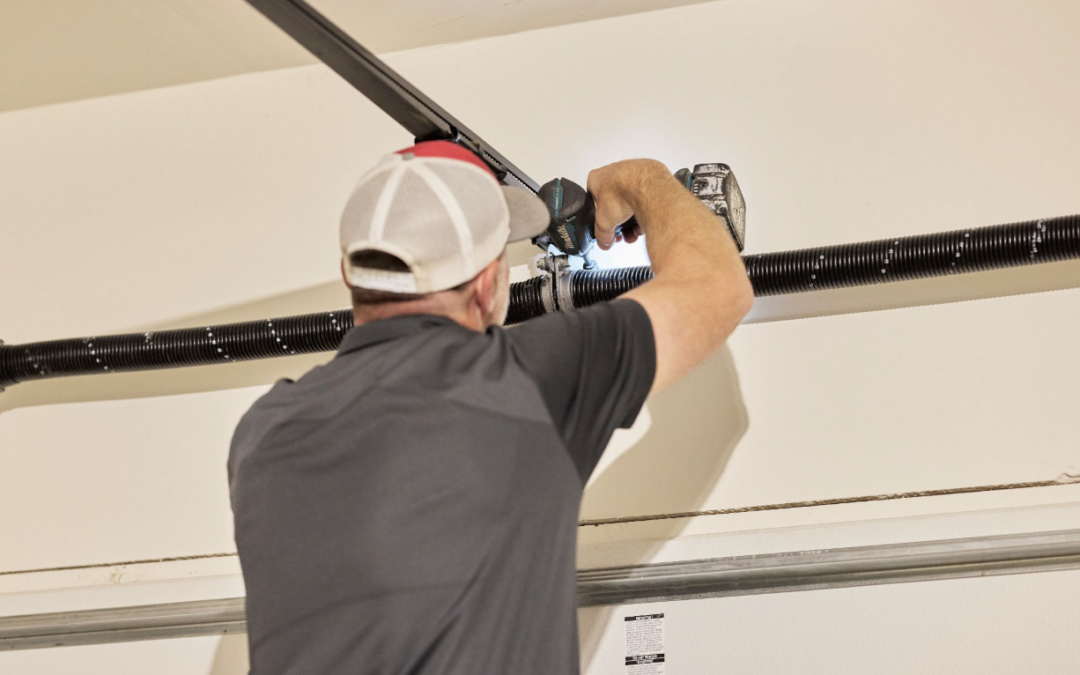
A broken garage door spring has a way of becoming a problem at exactly the wrong time. Maybe you’re trying to leave for work and the garage door won’t open, so your car is trapped inside. Or perhaps you heard a loud pop, and now the door is stuck wide open.
The good news? This is a common repair, and there are steps you can take to handle the situation safely.
In this guide, we’ll walk through how to recognize a broken garage door spring, what to do immediately, and why this is one repair you shouldn’t try to fix on your own. We’ll also cover what professional spring replacement involves so you know what to expect.
Central Oregon Garage Door is a Redmond-based garage door company that has installed and repaired garage doors across Deschutes, Jefferson, and Crook counties since 2005.
How to Tell If You Have a Broken Garage Door Spring
Not sure whether the spring is actually the problem? Look for these telltale signs.
1. There’s a Visible Gap in the Spring
Look at the spring from a safe distance. A properly functioning spring should appear continuous from one end to the other. If you see a noticeable gap somewhere in the coil, the spring has likely snapped. You might also notice that one section of the spring appears slightly separated or out of position.
Whatever you do, don’t touch the spring or try to inspect it up close. Even after breaking, garage door springs can remain under significant tension.
2. The Garage Door Won’t Open
A garage door that suddenly refuses to lift can also be a sign of a broken spring.
You may hear the garage door opener running when you press the button, while the door doesn’t budge. In some cases, the opener may begin lifting the door and then stop because the door has become too heavy for the system to handle safely.
If the opener is running but the door isn’t moving normally, stop using it rather than repeatedly pressing the button to see if it’ll eventually cooperate. Your garage door isn’t going to be persuaded by persistence.
3. The Door Feels Unusually Heavy
Garage door springs counterbalance much of the door’s weight, making it possible to move. When a spring breaks, that counterbalance disappears. The door may suddenly feel heavier than usual if you attempt to move it manually.
You might notice that the door is difficult to lift, drops quickly, or won’t stay open. These are all good reasons to stop and have a professional inspect the system.
4. You Heard a Loud Bang
Sometimes, the first sign is simply the sound.
A broken spring can make a surprisingly loud popping or banging noise when it snaps. If you heard a sudden bang from the garage and the door started behaving differently immediately afterward, a broken spring is one possible explanation.
Keep in mind that these signs can overlap with other garage door problems. A professional can determine whether the spring is broken and identify any additional issues that may need attention.
What to Do (and Not Do) Right Away
If you suspect a broken garage door spring, the safest move is to stop using the door until it’s inspected. Here’s some advice:
- Stop Using the Garage Door Opener: Even if the opener still runs, continued use can add stress to the opener and other components. If the door is stuck open, avoid repeatedly trying to close it with the opener.
- Don’t Force the Door Open or Closed: Without the spring providing its normal counterbalance, a garage door can be extremely heavy. Trying to lift or lower it yourself can lead to injury or damage to the door, tracks, rollers, or opener.
- Don’t Attempt to Remove or Replace the Spring Yourself: Garage door springs are tightly coiled and store a lot of energy. Releasing that tension incorrectly can cause serious injury or damage. This is one repair that’s best left to someone with the proper training and equipment.
If your vehicle is trapped inside the garage and you have places to be, we understand the temptation to get the door open and deal with the repair later. However, forcing a broken system can turn a straightforward spring replacement into a much larger job.
Why Do Garage Door Springs Break?
First off, every garage door runs on springs, and you’ll run into three kinds in Central Oregon.
- Torsion springs sit horizontally above the door. They store a twisting force that counterbalances the door’s weight, which is what makes a heavy door easy to lift.
- Extension springs run along the horizontal tracks on either side of the door, stretching and contracting as it moves.
- Torque Master system, and there are a lot of them installed around here. The springs are enclosed inside a tube, so you can’t see them at all. In our experience, they also tend to break sooner than a standard torsion spring setup. When one breaks, we fix it with a spring conversion. It costs more, but you get a new torsion spring, tube, cables, drums, and spring anchor bracket.
Whichever type you have, springs do the heavy lifting every time the door moves. Any part that works that hard wears out eventually. Here are a few reasons why.
1. Normal Wear and Tear
Think about how often your garage door moves. Even if you only open and close it a few times a day, that’s hundreds or thousands of cycles over the course of a year. Every cycle puts stress on the springs.
Over time, that repeated tension and movement causes the metal to fatigue. Eventually, the spring can no longer handle the load and snaps.
This is why a broken spring doesn’t necessarily mean something was wrong with your garage door. Sometimes, the spring simply did what it was designed to do for as long as it could.
2. Rust and Corrosion
Moisture can also shorten a spring’s lifespan. Rust and corrosion sometimes weaken the metal and increase friction as the spring moves. As the spring deteriorates, its ability to handle repeated cycles can decrease.
If you live in an area with significant humidity or moisture, keeping an eye on the condition of your garage door components can be worthwhile. Regular professional maintenance can also help identify corrosion or other wear before a component fails.
3. Cold Winter Temperatures
Cold weather can be hard on garage door systems for a few reasons.
Metal components can become more susceptible to stress in colder temperatures, while lubricants may become thicker and components can become less flexible. Snow, ice, and temperature changes can also put additional demands on the door system.
That doesn’t mean your garage door spring is guaranteed to break during the first cold snap of the year. But if a spring was already nearing the end of its service life, winter conditions can be enough to expose an existing weakness.
Why Garage Door Spring Repair Isn’t a DIY Job
There are plenty of garage door maintenance tasks homeowners like yourself can handle. Spring replacement isn’t one we’d recommend adding to that list.
The biggest issue is tension. Garage door springs are designed to store a substantial amount of energy so they can help lift and balance a heavy door. That energy doesn’t simply disappear when you decide it’s time to replace the spring.
Removing, adjusting, or installing a spring requires the right tools, knowledge, and procedures. If the spring moves unexpectedly, it can cause major injuries or damage to the garage door and surrounding equipment.
There’s also more to the repair than simply swapping one spring for another. The spring needs to be properly matched and adjusted to the door. Other components may also need to be inspected. So, while a broken spring might look like a relatively simple mechanical problem, it’s not a good place to experiment with a DIY fix.
When in doubt, leave the spring alone and call a qualified garage door professional.
What to Expect from a Professional Garage Door Spring Repair
The first step is an inspection. The technician will confirm whether the spring is broken and look over the rest of the garage door for wear or damage. That may include checking the cables, drums, rollers, tracks, hinges, bearings, and opener.
If the spring needs replacing, the technician will select the right replacement based on the door’s size, weight, and hardware. They’ll safely remove the damaged spring, install the new component, and make the necessary adjustments. If your garage door uses two springs and one is broken, the second will be assessed and potentially replaced as well.
Afterward, the door should be tested to make sure it moves smoothly and stays properly balanced. The technician can also verify that the opener and other safety components are functioning as they should.
Need Your Garage Door Springs Inspected?
A broken garage door spring is frustrating, but knowing what to do can help you handle the situation safely. If your garage door is stuck, unusually heavy, or showing signs of a broken spring, give our team a call. We’ll inspect the system, explain what’s needed, and help get your garage door working properly again.
Request a free estimate or call us at (541) 593-5700.
FAQ About Broken Garage Door Springs
How long do garage door springs typically last?
Garage door springs don’t last forever. Their lifespan depends on how often you use the door, as well as factors like spring quality, maintenance, rust, and environmental conditions.
Can I open my garage door if the spring is broken?
It’s best not to try. Without a functioning spring, your garage door can be extremely heavy and difficult to control. Attempting to lift it manually can result in injury or damage to the door.
Should I replace both garage door springs?
If your garage door has two springs, replacing both may make sense when one breaks. The springs typically have similar ages and usage, so the second spring may also be nearing the end of its service life. A professional can inspect both and explain whether replacing them together is appropriate.
